Why AI Audits Miss 40% of Critical Risks: Lessons from Lorikeet
The Residual Risk Gap: Why AI-Assisted Audits Leave 40% of High-Impact Vulnerabilities Behind
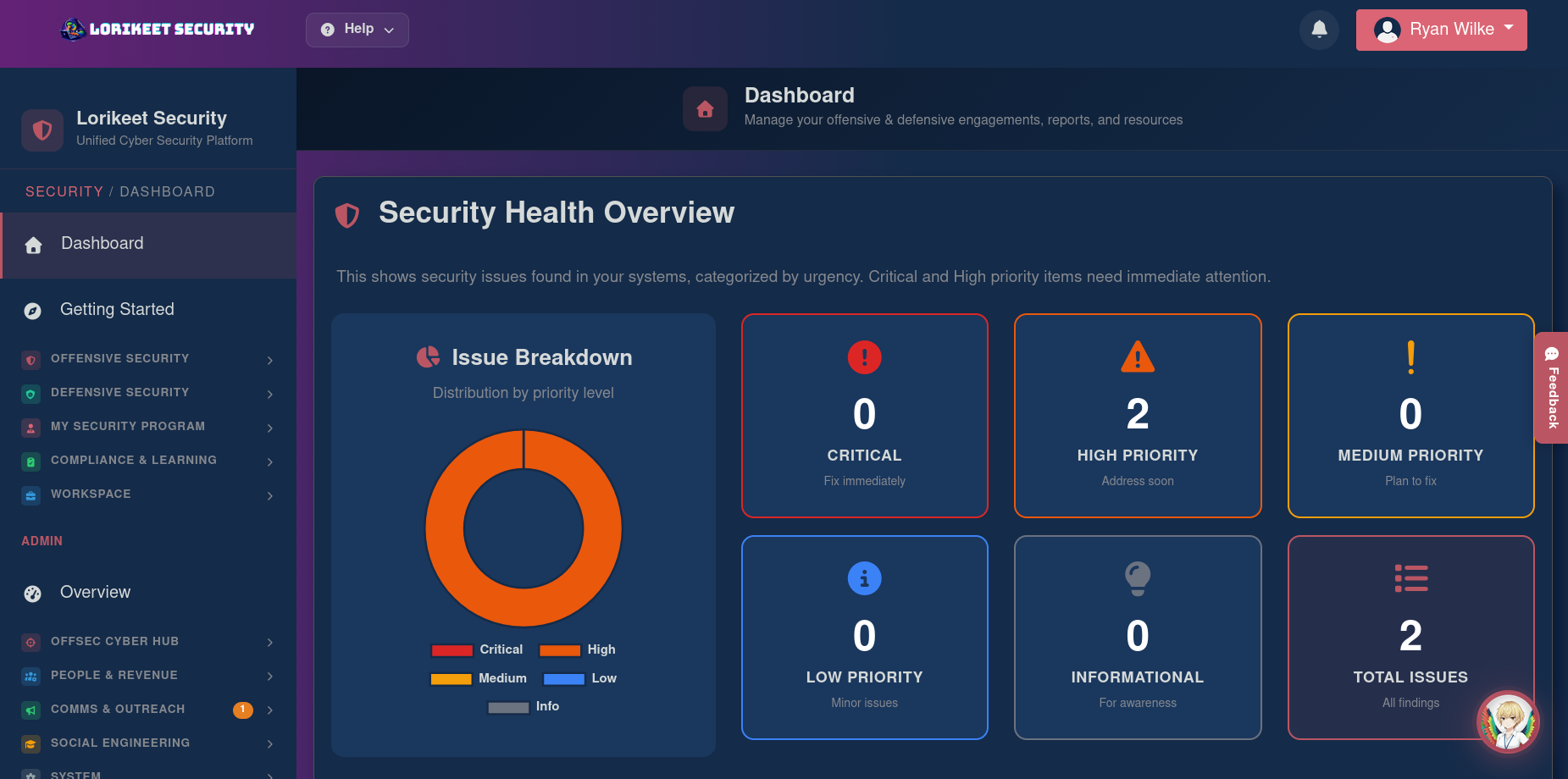
Teams using AI-assisted code review tools like Claude, Cursor, and Copilot are reporting a 60% reduction in common syntax-level vulnerabilities, yet manual penetration testing is uncovering critical flaws that these models structurally cannot see. In my 15 years navigating the startup landscape, I’ve seen silver bullets come and go. Right now, the industry narrative is that LLMs have "solved" security. From what I’ve seen on the ground at Lorikeet Security, the reality is far more nuanced. Their recent engagement with Flowtriq provides a masterclass in modern offensive security: after an exhaustive AI-driven audit cleared the codebase of XSS and SQL injection, Lorikeet’s manual intervention still unearthed five distinct vulnerabilities. This confirms a pattern I’ve tracked since 2021—as AI hardens the source code, the attack surface simply migrates to the runtime environment and infrastructure configuration.
Bridging the Chasm Between Static Analysis and Runtime Reality
Lorikeet Security’s architecture is built on the philosophy that "Penetration Testing as a Service" (PTaaS) must evolve beyond the PDF report. Their platform functions as a continuous offensive layer integrated into the SDLC. While traditional firms treat security as a point-in-time snapshot, Lorikeet utilizes a hybrid stack that combines automated Attack Surface Management (ASM) with a practitioner-led manual testing engine.
The technical decision to focus on "AI-native" development cycles is strategic. By assuming the client has already used tools like Claude for initial hardening, Lorikeet bypasses the "low-hanging fruit" noise that plagues legacy pentesting. Their architecture prioritizes real-time data streaming through a modern portal, allowing founders to see live findings as they are discovered. This eliminates the two-week feedback lag that usually kills startup velocity. Scalability is handled through their distributed team across six North American hubs, ensuring that as a startup moves from a seed-stage MVP to a FedRAMP-compliant enterprise, the offensive validation scales alongside their cloud infrastructure.
Feature Breakdown
Core Capabilities
- →Hybrid Offensive Validation: Lorikeet combines automated scanning with deep-tissue manual testing. In the Flowtriq case, while AI caught template injections, Lorikeet identified session management edge cases that required stateful understanding of the application's business logic—something LLMs currently lack.
- →Continuous Attack Surface Management (ASM): Unlike static scanners, this feature monitors for "shadow IT" and misconfigured subdomains in real-time. It acts as an early warning system for infrastructure drift, which is where most modern breaches occur.
- →vCISO & SOC-as-a-Service: For bootstrapped founders, hiring a full-time CISO is often financially impossible. Lorikeet provides high-level strategic oversight and 24/7 monitoring, bridging the gap between technical execution and board-level compliance requirements.
Integration Ecosystem
The Lorikeet portal is designed for the modern developer workflow, moving away from siloed security tools. It features real-time chat integration, allowing developers to speak directly with the pentester who found a bug. By integrating findings directly into the existing project management stack—think Jira, Slack, or GitHub—they treat security vulnerabilities as high-priority tickets rather than abstract risks. This API-first approach ensures that the output of a pentest is immediately actionable, fitting into the CI/CD pipelines of fast-moving SaaS and fintech startups without causing friction.
Security & Compliance
Lorikeet is purpose-built for startups facing rigorous audits. Their methodology aligns with SOC 2, HIPAA, PCI-DSS, HITRUST, and FedRAMP frameworks. In my experience, most "automated" compliance tools provide a false sense of security; Lorikeet provides the practitioner-built validation that auditors actually want to see. They handle sensitive client data with enterprise-grade encryption and strict data residency protocols, ensuring that the very act of testing your security doesn't create a new liability.
Performance Considerations
The performance of a security partner is measured in "Time to Remediation." Lorikeet’s PTaaS model excels here by delivering live findings. Instead of waiting for a 100-page report at the end of a three-week engagement, developers can begin patching High-severity issues within hours of discovery. Their resource usage is non-intrusive; because they focus on manual, targeted testing rather than aggressive, unthrottled automated fuzzing, they avoid the common pitfall of crashing production environments or triggering "denial of service" false positives during the audit.
How It Compares Technically
When you look at the landscape, you have legacy giants like Rapid7 or NCC Group, which often feel too slow and expensive for a lean startup. On the other end, you have automated scanners like Snyk or Tenzir. While Snyk is excellent for catching vulnerable dependencies, it would have missed the reverse-proxy header configuration issues Lorikeet found at Flowtriq. Unlike HackerOne’s bug bounty model, which can be noisy and unpredictable, Lorikeet provides a structured, professional engagement with guaranteed coverage. They occupy the "Goldilocks zone": more intelligent than a bot, more agile than a legacy consultancy.
Developer Experience
The "DevEx" of Lorikeet is surprisingly high for a security firm. Their documentation is clear, but the real value is the live portal. Founders don't have to play "telephone" between a security report and their engineering team. The inclusion of real-time chat with the testers means that if a developer can't reproduce a finding, they get an immediate technical breakdown. This educational aspect helps teams write more secure code in the future, effectively upskilling the internal engineering team during the audit process.
Technical Verdict
Lorikeet Security is the ideal choice for self-funded founders who have moved past the "move fast and break things" phase and are now facing serious compliance or enterprise procurement hurdles. Their strength lies in their ability to find the "logical" bugs—the runtime TLS posture flaws and file-system hygiene issues—that AI simply cannot grasp. While they are more expensive than a simple automated scan, the cost of a single missed Medium-severity vulnerability far outweighs their fee. If you are building in healthcare, fintech, or AI, Lorikeet provides the "proof of work" your customers will eventually demand.
Lorikeet Security Case Study
lorikeetsecurity.com/blog/flowtriq-case-study-ai-audit-pentest-gap